
updated: 01/29/26
Getting Information and Guidance on Military Drug Testing
Military drug testing can feel confusing, especially when you’re hearing different “panel” lists and rumors online. This page is a general, educational overview of how DoD’s urine drug-testing program is structured and what drug classes are commonly included in DoD technical guidance. Policies and testing analytes can change over time, and details can vary by Service, unit, and the circumstances of the test.
Our latest resource guide from TriCareRehabs details the specific substances they screen for and the importance of these tests, and is regularly updated. Keep reading for a breakdown of military drug testing protocols, and remember our caring team is here at any time for confidential support!
Important: This content is not legal advice, not medical advice, and not official DoD guidance. If you’re facing potential adverse action, consider speaking with your chain of command and legal counsel/JAG for situation-specific direction. If you or someone you love is in immediate danger or at risk of self-harm, call 911. If you need urgent emotional support in the U.S., you can call or text 988.
Main Takeaways on Drug Testing in the Military
- Military drug testing is primarily built around urinalysis to support readiness and safety.
- What’s tested can change over time, but DoD technical guidance outlines specific drug classes and analytes that military forensic labs are authorized to screen and confirm (for example, THC metabolite, cocaine metabolite, amphetamines/MDMA, certain opioids including heroin metabolite, fentanyl/norfentanyl, benzodiazepines, and select synthetic cannabinoids).
- Testing frequency and circumstances can vary by Service, unit, and situation, and positive results may lead to administrative or disciplinary action depending on the facts.
- If you’re notified of a positive test, ask what confirmatory method was used, gather documentation for any lawful prescriptions, and consider speaking with your chain of command and legal counsel/JAG for case-specific guidance.
An Overview of Military Drug Testing Types and Protocols
At its core, the military’s drug testing policy aims to maintain operational readiness and safety. This ensures service members can perform their duties without substance impairment, preserving the discipline and accountability essential to military service. Military drug tests aim to foster a culture of responsibility and safety, not just catch substance users.
Service members are encouraged to participate in substance use education programs to avoid drug use. For those facing challenges, proactive treatment through programs like TriCareRehabs is recommended to ensure they can continue their service without jeopardizing their careers.
How Frequently Do US Armed Forces Get Drug Tested?
The unpredictable nature of military drug testing serves as a powerful deterrent, as service members know they can be tested at any time without notice. This randomness helps maintain discipline and readiness.
There isn’t one universal “schedule,” but DoD policy sets minimums and defines several common testing situations.
At a minimum, active component Service members are tested at least annually, and DoD policy also sets a minimum random-testing rate (e.g., a monthly percentage of assigned personnel), with Reserve Component testing handled under separate minimum guidance.
Beyond routine random testing, urinalysis collections can occur under specific collection premises (the reason the sample is collected). DoD policy recognizes multiple premises, including (examples):
-
Random/inspection testing
-
Probable cause testing
-
Consent testing
-
Medical testing (in clinical contexts)
-
Rehabilitation testing
-
Safety/mishap testing
-
Command-directed testing (generally for administrative purposes)
Because the “why” matters, a helpful question to ask (through command/DDRP channels) is: “What collection premise/code was used for this test?” That premise can affect what actions are allowed and what processes apply next.
What Types of Drug Tests Are Used for Military Members?
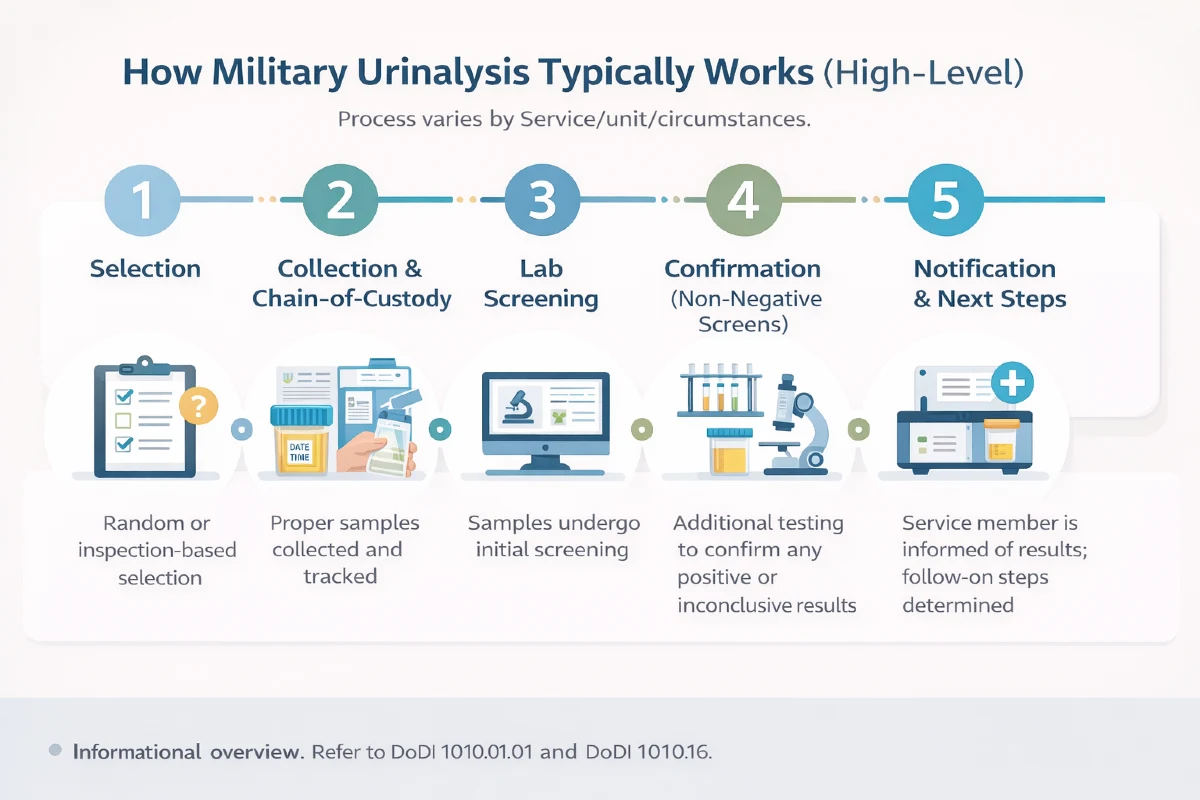
For routine readiness and deterrence, DoD’s military drug abuse testing program is built around urinalysis. Urine collection supports consistent chain-of-custody procedures and allows military forensic toxicology drug testing laboratories to apply standardized screening and confirmatory methods when required.
It’s also important to separate routine urinalysis from other kinds of testing that can happen for different reasons. For example, alcohol impairment is often evaluated through breath or blood testing in incident-specific contexts (such as safety events or investigations), and clinical toxicology testing can be ordered for patient care.
Those scenarios are not the same as the DoD urinalysis program and can follow different rules about why the test is ordered and how results are used.
When people ask “what drugs does the military test for,” the most accurate answer is: the DoD program uses a defined list of analytes and cutoffs that military forensic labs are authorized to test and confirm in urine, and that list can be updated over time.
Because of that, it’s safer to avoid hard claims about “one fixed panel” and instead focus on the DoD-authorized drug classes/analytes and the fact that Services can update or add testing based on emerging substance risks.
What are the Most Common Drugs Detected in Military Tests?
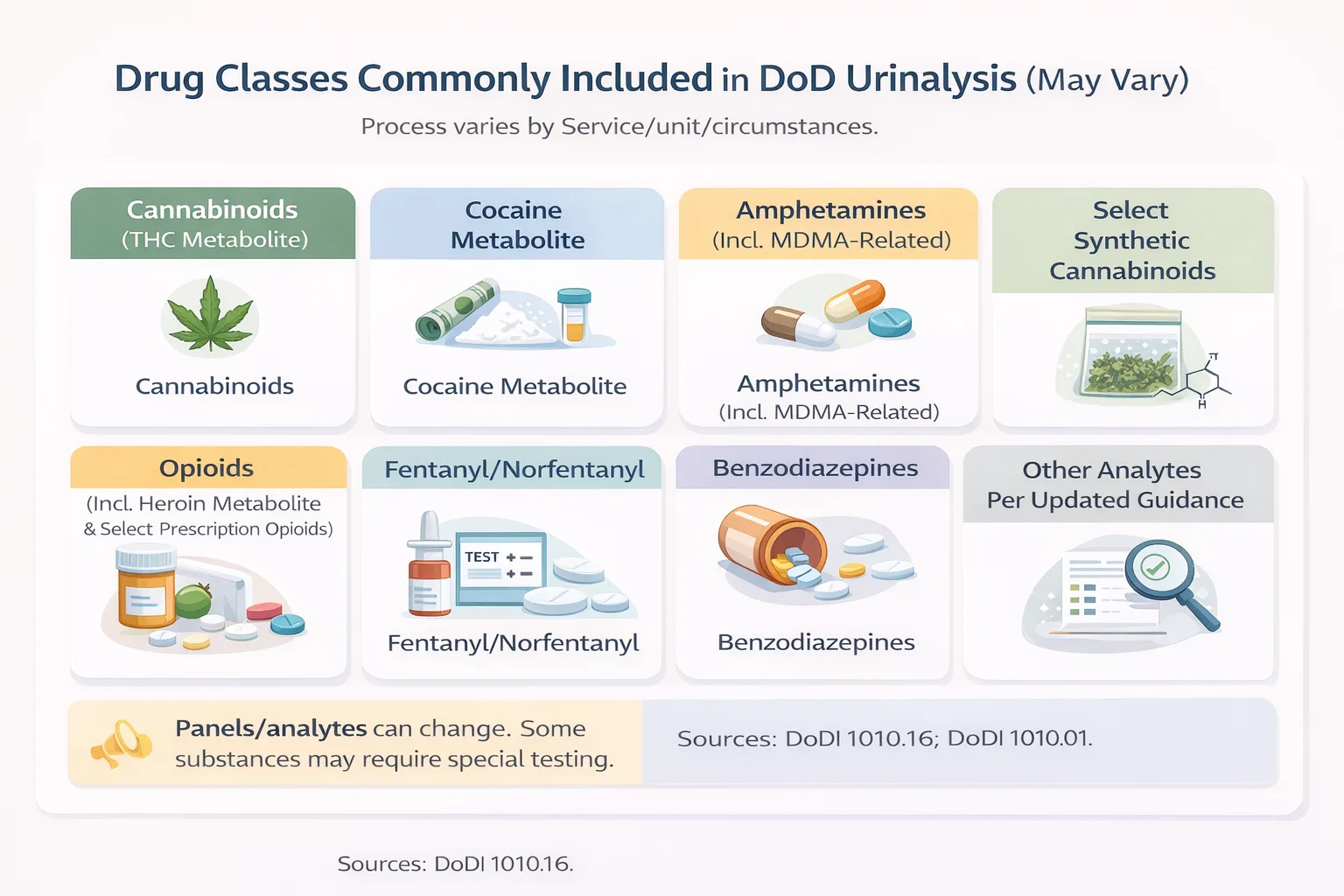
As mentioned above, military drug tests detect a wide array of substances, reflecting the diverse challenges of drug use. A comprehensive 26-drug panel includes substances like marijuana, cocaine, and methamphetamine, ensuring personnel are held to high standards of conduct and readiness.
Drugs detected in military tests are categorized into illicit drugs, prescription medications, synthetic cannabinoids, and designer drugs. Each category presents unique challenges and requires specific testing protocols.
What Illicit Drugs are Tested for in the Military?
The safest, most accurate way to answer this is: the DoD urinalysis program tests for specific drug classes/analytes listed in their DoD technical tables (see references and resources at the article’s bottom), and the exact mix can vary based on testing purpose and current DoD guidance.
Drugs commonly included in routine screening
DoD technical procedures describe routine screening focused on major categories such as:
-
Cannabinoids (THC metabolite)
-
Cocaine metabolite
-
Heroin metabolite (6-MAM)
-
Amphetamines (including methamphetamine)
Additional drugs the program can test for
DoD tables also include other controlled substances (and related analytes) that may be tested depending on DoD/Service program decisions and prevalence trend – for example, certain prescription opioids, designer amphetamines (e.g., MDMA-related analytes), and other categories defined in the DoD tables.
The military also now tests for newer synthetic drugs like bath salts, K2/spice, and, in some cases, the military tests for kratom as well. These pose significant risks to readiness and safety, making their detection critical. We will go into more detail below.
Testing for Prescription Medications and Alcohol in the Armed Forces
Prescription medications
Routine military urinalysis is designed to detect controlled substances and specific analytes—not to “screen your prescriptions” in a general sense. That said, some medications that are legally prescribed (or misused) can overlap with the drug classes the program tests for.
If you have a valid prescription, what matters most in practice is documentation and disclosure through appropriate channels (consistent with your Service’s guidance). DoD technical materials explicitly recognize a medical review process (MRP) as part of the drug testing ecosystem.
Alcohol
Alcohol is typically handled under separate fitness-for-duty, safety, medical, or investigative policies – not the routine drug urinalysis analyte tables. If alcohol testing occurs, it’s usually through context-specific methods (for example, breath or blood in certain circumstances), and rules can vary by Service and situation.
Does the Military Test for Synthetic Cannabinoids and Designer Drugs?
Synthetic cannabinoids (“Spice/K2”) and designer drugs
DoD technical tables include categories for synthetic cannabinoids and other non-traditional drugs/analytes (often discussed as “designer drugs”). Testing coverage can depend on current DoD guidance and how prevalence trends are being addressed.
Delta-8 THC and hemp/CBD products
From a compliance standpoint, the simplest message is also the most accurate: DoD policy treats hemp-derived products as prohibited for Service members, and OPSS warns that these products could show up on a routine drug test.
Kratom
Kratom has been added to the DoD prohibited substances ecosystem via OPSS, and official DoD-affiliated communications warn Service members not to buy or use it.
Whether kratom shows up on a “routine” urinalysis panel is a different question—policy makes clear that special testing can be requested for substances not routinely included, using approved labs and coordination steps
Can Over-the-Counter Drugs Cause False Positives on Drug Tests?
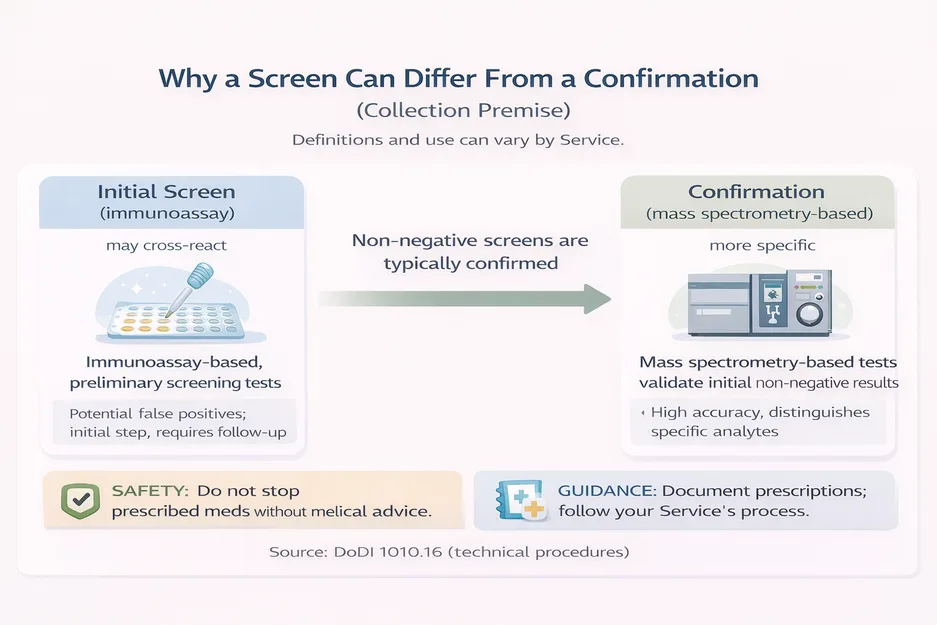
Some substances can trigger a presumptive result on an initial screen, but military drug testing is designed to reduce error through confirmation testing and strict lab procedures.
DoD technical procedures describe an initial screening test (often an immunoassay) and a separate confirmatory test using chromatography/mass spectrometry for presumptive positives. Additional guidance is suggested below:
-
Some OTC products (and especially some supplements) can be contaminated or mislabeled, and OPSS maintains an official DoD Prohibited Dietary Supplement Ingredients resource to help Service members avoid risky substances.
-
If you’re taking an OTC medication for a legitimate reason, don’t stop abruptly without medical input. If you’re concerned about testing implications, talk to medical staff and follow your Service’s disclosure guidance.
-
If a supplement is suspected of contamination, DoD technical procedures even describe circumstances where supplement testing may be pursued (typically using reputable labs and often at the Service member’s expense).
Knowing which OTC drugs can cause false positives and the steps to take if you test positive is crucial. This knowledge helps mitigate the impact of false positives and ensures fair treatment.
Considerations Following a Positive Drug Test in the Military
If a service member tests positive, they should immediately inform their command about any OTC medications taken. This proactive approach can help clarify the situation and prevent unwarranted disciplinary actions.
When a positive result is suspected to be caused by OTC medication, requesting a confirmatory test is essential. These tests use precise methods to validate or refute the initial result, ensuring fair judgment.
Steps to Take If You Test Positive for Drugs in the Military
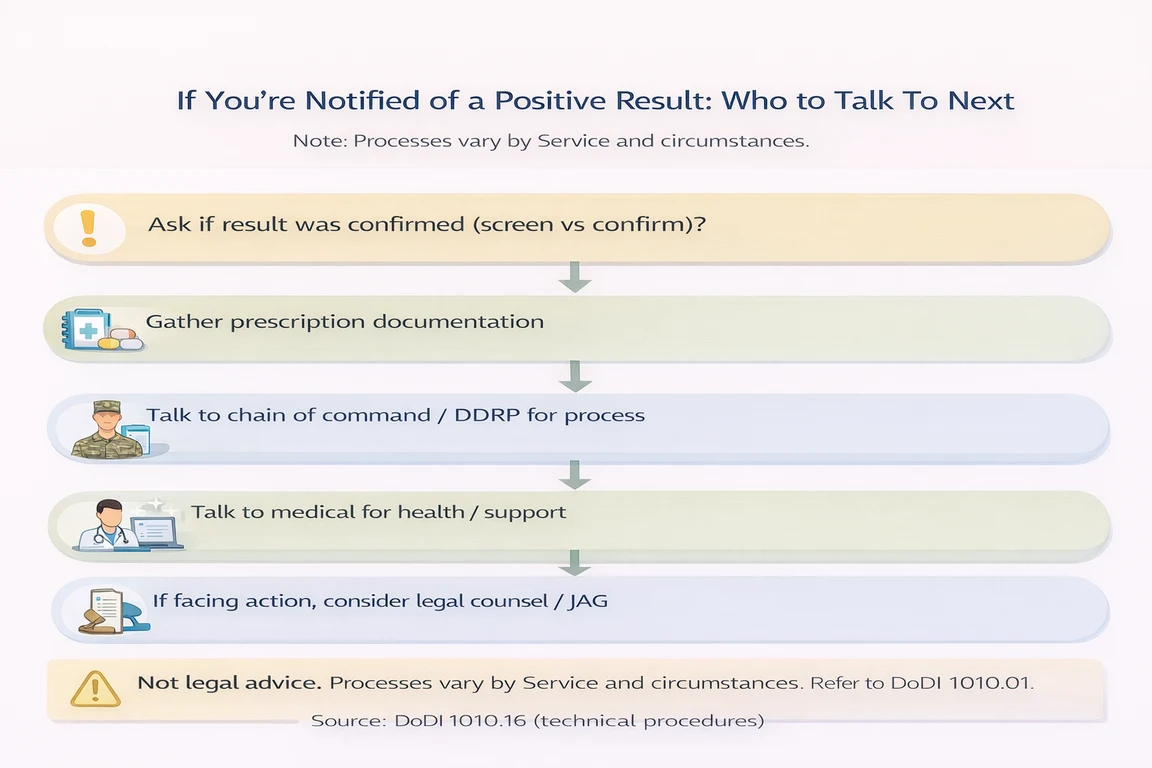
Service members and military members have legal rights and protections if they test positive for drugs, ensuring fairness and due process. The military is committed to identifying errors and providing avenues for defense.
Knowing your rights and understanding the processes can make a significant difference in navigating the military justice system and military drug testing. Legal representation and appeals provide a robust framework for addressing disputes or inaccuracies.
Your Right to a Confirmatory Test Following Military Drug Testing
If a urine specimen is positive on an initial screen, DoD technical procedures describe a structured process: an initial immunoassay screening test, followed by confirmatory testing at a military forensic toxicology drug testing laboratory using more specific methods. Confirmation is typically part of the laboratory workflow for non-negative screens—not merely an optional step a service member must “request.”
DoD guidance also emphasizes method validation and quality controls because results can have serious administrative or disciplinary implications. That’s why it’s important for informational pages to be precise: terms like “positive” can be used loosely online, but in practice, there can be differences between an initial screen and a confirmed result.
If you are notified of a positive test result, the practical next steps include:
-
asking whether the result reported reflects a confirmed test;
-
gathering documentation for any lawful prescriptions; and
-
if adverse action is being considered, speak with legal counsel/JAG for guidance under your Service’s policies and the Uniform Code of Military Justice.
What are the Consequences of Testing Positive for Drugs in the Military?
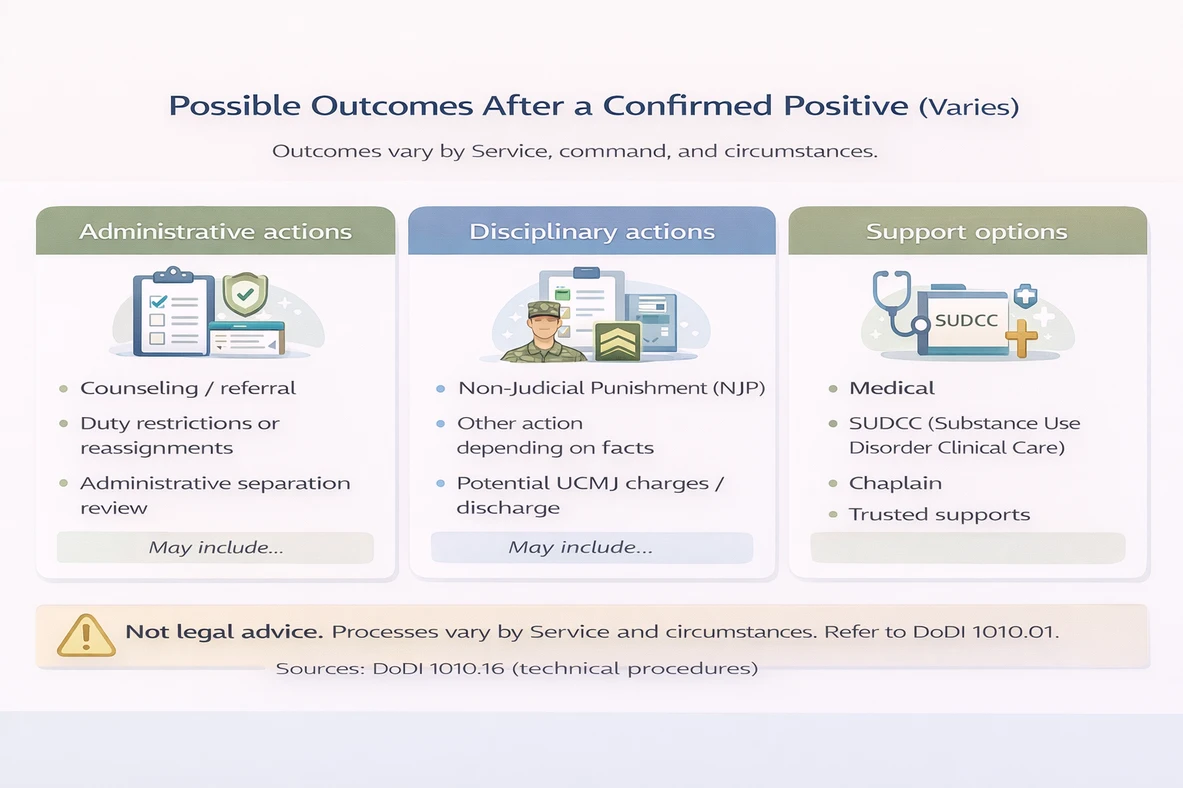
Testing positive for drugs in the military can lead to severe consequences, affecting both immediate and long-term aspects of a service member’s career. Consequences range from administrative actions to severe disciplinary measures.
Understanding potential repercussions and available support, such as rehabilitation programs, can help service members navigate the aftermath of a positive test result.
Administrative Actions
Administrative actions following a positive drug test can include non-judicial punishment, rank reduction, and potential discharge. Non-judicial punishment may involve demotion and loss of pay, maintaining discipline, and upholding standards.
For active service members, failing a drug test can lead to swift administrative and disciplinary measures, emphasizing adherence to substance use policies.
Impact on Military Career
A positive drug test can have significant consequences for a service member’s career. Immediate actions, such as suspension and referral to rehabilitation, can hinder advancement. Proactively seeking treatment through programs like TriCareRehabs is advisable to mitigate these impacts.
Understanding these consequences underscores the importance of complying with military drug policies and proactively managing substance use issues.
Staying Informed About Prohibited Substances
Staying informed about prohibited substances is crucial to avoid unintentional violations. Regularly checking military updates helps service members stay informed about changes in substance regulations.
Service members should be cautious about dietary supplements, as up to 10% may contain banned substances. Vigilance can prevent accidental ingestion of prohibited substances and subsequent consequences.
Getting Proven Substance Abuse Treatment Programs

Substance abuse treatment programs help service members regain fitness for duty. The military and Army Substance Abuse Program (ASAP) assists in reintegration and maintaining readiness after treatment, and participation may be mandated after testing positive.
TriCareRehabs can help find rehabilitation facilities covered by TRICARE policies, ensuring service members receive the support needed to overcome substance abuse issues.
Reach Out to TriCareRehabs Now for Proven Support Options
The goal of our resource was to show how military drug testing is a comprehensive and critical component of maintaining the readiness and safety of our armed forces, and how proactive treatment can be helpful.
From the frequency and randomness of tests to the types of substances detected and the potential consequences of testing positive, understanding these aspects is essential for all service members and applicants.
Staying informed, adhering to military substance use policies, and seeking proactive treatment when necessary can help service members maintain their careers and contribute effectively to their duties.
If you or a loved one is on active duty and facing issues with substances and would like proven, accredited treatment options, make the confidential call to TriCareRehabs now!
FAQs on Drug Testing in the Military
How often are military drug tests conducted?
DoD guidance describes random selection and minimum annual testing baselines (with more frequent testing recommended for deterrence), but frequency can vary by Service and unit.
What types of drugs are commonly detected in military drug tests?
Military drug tests commonly detect a range of substances, including marijuana, cocaine, methamphetamines, as well as opioids and benzodiazepines.
If a screen is positive, is there a confirmation test?
DoD guidance describes screening followed by confirmatory testing at a military forensic toxicology lab for non-negative results.
What are the consequences of testing positive for drugs in the military?
Testing positive for drugs in the military can lead to serious administrative actions, including non-judicial punishment, rank reduction, and potential discharge, which can severely affect your military career.
Does the military drug test include THC, delta-8, and CBD/hemp products?
DoD urinalysis detects THC metabolites. Products marketed as “hemp,” “CBD,” or “delta-8” can still lead to THC positives, and DoD policy contexts treat these products as prohibited for Service Members.
Does the military test for synthetic cannabinoids (Spice/K2)?
DoD technical procedures include select synthetic cannabinoids on the authorized analyte list, and testing can be updated over time.
Can supplements cause a positive test?
Yes. Supplements are not reviewed like prescription drugs, and some products may be mislabeled or adulterated. Use OPSS tools like the Prohibited List/Scorecard and avoid high-risk products.
What should I do if I’m worried about consequences?
Ask whether the result was confirmed, document lawful prescriptions, and consider speaking with your chain of command and legal counsel/JAG for guidance specific to your situation.
References and Resources
Department of Defense. (2025). DoD Instruction 1010.01: Military Personnel Drug Abuse Testing Program (MPDATP) (Incorporating Change 2, August 21, 2025). https://www.esd.whs.mil/Portals/54/Documents/DD/issuances/dodi/101001p.pdf
Department of Defense. (2025). DoD Instruction 1010.16: Technical Procedures for the Military Personnel Drug Abuse Testing Program (Incorporating Change 1, August 22, 2025). https://www.esd.whs.mil/Portals/54/Documents/DD/issuances/dodi/101016p.pdf
Operation Supplement Safety (OPSS). (2022, November 14). Hemp and DoD policy. https://www.opss.org/article/hemp-and-dod-policy
Operation Supplement Safety (OPSS). (2025, June 12). Delta-8-THC: A prohibited psychoactive substance. https://www.opss.org/article/delta-8-thc-prohibited-psychoactive-substance
Operation Supplement Safety (OPSS). (2025, October 7). Kratom and 7-OH: Significant Risks to Health. https://www.opss.org/article/kratom-and-7-oh-significant-risks-health
Operation Supplement Safety (OPSS). (2026, January 28). DoD Prohibited Dietary Supplement Ingredients. https://www.opss.org/dod-prohibited-dietary-supplement-ingredients
U.S. Department of Defense, Military Health System (Health.mil). (2025, July 29). Service Members and Dietary Supplements: What You Need to Know. https://health.mil/News/Articles/2025/07/29/Service-Members-and-Dietary-Supplements-What-You-Need-to-Know
Dyess Air Force Base. (2025, August 28). Reminder to Service Members: Kratom on DoD list of prohibited substances. https://www.dyess.af.mil/News/Article/4288943/reminder-to-service-members-kratom-on-dod-list-of-prohibited-substances/
U.S. Government Publishing Office. (2021). 10 U.S.C. § 912a (Article 112a): Wrongful use, possession, etc., of controlled substances. https://www.govinfo.gov/app/details/USCODE-2021-title10/USCODE-2021-title10-subtitleA-partII-chap47-subchapX-sec912a

- Is There a National Guard Substance Abuse Program? - December 29, 2025
- Marine Corps Substance Abuse Program Guidance - December 8, 2025
- Does Spice Show Up on a Military Drug Test? - December 2, 2025
 855-720-0540